Does Shame Cause Premature Ejaculation? An ASTO-Certified Sex Therapist Answers
WELCOME
Sex and sexuality are universal human experiences, yet the intimacy of the topic makes it a conversation that often happens in hushed whispers and incognito Google searches. So, we are bringing the conversation into the open, with education and resources that embrace the diversity of the human experience. Adults from all walks of life are welcome at GETSOME.
Our approach to sexual education combines compassion with humor to help everyone overcome the often daunting task of addressing sexual shame. Because, no matter who you are or who you love, you deserve to GETSOME.
LEARN MORE
April 27, 2026
Shame and premature ejaculation are deeply connected. Shame doesn’t just accompany premature ejaculation, it actively drives it. After 15 years working as a sex therapist, I’ve seen this pattern more times than I can count: the moment shame enters the room, the nervous system activates, breathing shallows, and the body accelerates. The very experience of dreading “coming too soon” is part of what causes it.
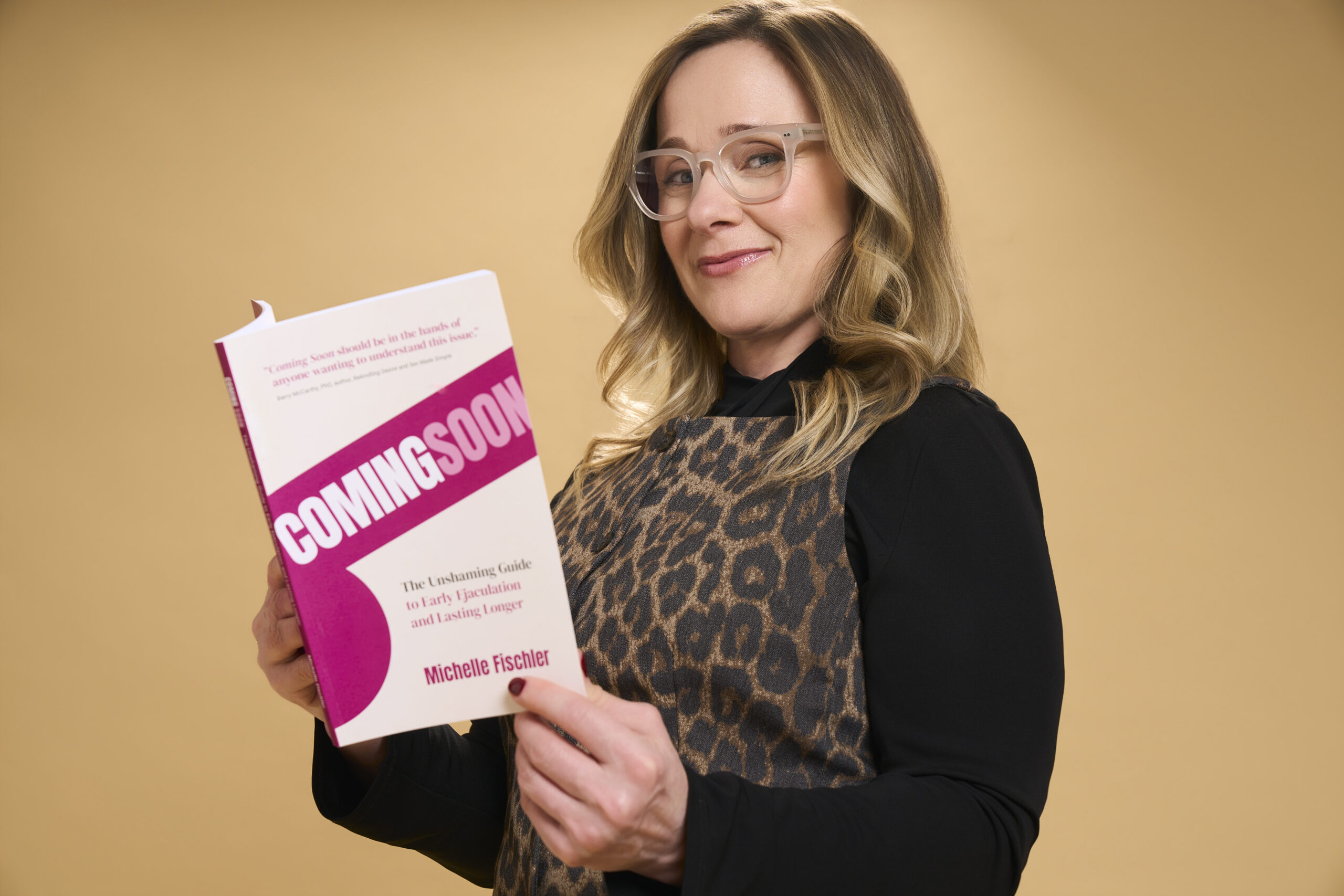
My name is Michelle Fischler. I am an ASTO-Certified Sex Therapist based in Toronto and the founder of GETSOME INC. My book, Coming Soon: The Unshaming Guide to Early Ejaculation and Lasting Longer, is available now in paperback, ebook, and audiobook. It is a shame-informed, nervous system-based guide to what I call early ejaculation, written for readers and clinicians who want something more current than technique alone.
This post is for you if you’ve Googled “premature ejaculation cure” at midnight and felt worse after. Read on.
Here’s What We’re Getting Into
ToggleWhat Is the Connection Between Shame and Premature Ejaculation?
Premature ejaculation, or PE, is the most common male sexual concern, affecting an estimated 20-30% of men at some point in their lives. And yet only 9% of men with PE have ever talked to a physician about it. The barrier isn’t access or information. It’s shame.
Here’s what happens physiologically: shame activates the sympathetic nervous system, the same system responsible for ejaculatory reflex. When you’re already worried about coming too fast, your body registers threat. Breathing becomes shallow. Muscles tighten. The window between arousal and ejaculation narrows.
Translation: the shame spiral IS the accelerant.
This is why technique-focused approaches, stop-start methods, numbing sprays, medication, offer limited relief for many people. They address the timing but bypass the nervous system pattern underneath. And when technique fails, shame compounds. The cycle continues.
What I call the “unshaming approach” works differently. It addresses shame first, then builds new patterns from the ground up.
What Is the Unshaming Approach to Premature Ejaculation?
The unshaming approach, developed through my clinical work and grounded in David Bedrick’s framework on the internalized shaming witness, begins with one foundational shift: early ejaculation is not a dysfunction. It is a learned pattern the body can unlearn.
The language matters here. “Premature ejaculation” encodes failure. It implies you arrived before you were supposed to. “Early ejaculation” is simply descriptive, a timing pattern, not a character verdict. That shift in language is not cosmetic. It creates the psychological safety the nervous system needs to begin learning something new.
The core reframes the unshaming approach offers:
- “Premature ejaculation” becomes “early ejaculation”: descriptive, not prescriptive
- “Dysfunction” becomes “pattern”: the body learned this, it can learn something new
- “Control” becomes “choice”: having options along the way, not forcing compliance
- “Broken” becomes “responding”: your body is doing exactly what it was trained to do
- “Performance” becomes “presence”: sex as jazz, not recital
As I write in Coming Soon: “You’re not broken. You’re responding. And responses can change.”
Is Premature Ejaculation a Nervous System Pattern?
Yes. And this is one of the most important reframes in modern sex therapy.
The ejaculatory reflex is automatic, designed to fire without conscious input, which is exactly why willpower and distraction techniques don’t work reliably. You can’t willpower your way out of an automatic reflex.
What you can do is influence the conditions under which it fires.
My book introduces the arousal scale (1-10), where the window between 5 and 7 is where choice lives. Most people with early ejaculation skip this window entirely, going from low arousal to ejaculation without ever noticing the middle range. The work isn’t about stopping the reflex. It’s about widening your awareness of what’s happening in your body before it fires.
Research by Dr. Lori Brotto shows that mindfulness-based approaches measurably improve ejaculation timing. Eight weeks of consistent diaphragmatic breathwork shows real change. This is nervous system retraining, not willpower.
Three key nervous system tools:
- Diaphragmatic breathing: Your nervous system’s direct reset. Shallow breathing locks you in high gear.
- The arousal scale: Learning to identify where you are at 5, 6, 7 builds the window of choice.
- The three-breath pause: A partnered communication tool for slowing arousal without breaking connection.
How Do You Last Longer Without Medication?
The question most people bring to Google: how do I last longer without pills?
The honest answer from my practice: lasting longer without medication is absolutely possible but it requires working with the nervous system rather than against it.
Pills and topical anaesthetics manage the moment. They reduce sensation or delay reflex without touching the underlying pattern. The moment you stop taking them, the pattern remains.
The pathway that creates lasting change:
- Build interoceptive awareness: Learn to notice internal body signals in real time
- Establish a consistent solo practice: Not consolation, valuable research. You cannot train what you cannot feel.
- Communicate with your partner: Communication is infrastructure, not a mood-killer
- Allow a realistic timeline: Most people see meaningful change within 6 to 18 months
“This is a much needed modernized book on premature ejaculation for general readers and clinicians. Michelle replaces the old myths with a new model focused on comfort and pleasure, not performance. Coming Soon should be in the hands of anyone wanting to understand this issue.”
Barry McCarthy, PhD, professor emeritus, American University
Does Premature Ejaculation Affect Relationships?
Yes, and often in ways that don’t get talked about honestly.
Partners of people with PE carry their own shame. They wonder if they’re the cause. They hold back complaints because they don’t want to make it worse. They go through entire sexual experiences performing enjoyment to protect their partner’s ego. That’s exhausting, and it erodes connection over time.
Coming Soon is not just a book for the person experiencing early ejaculation. It’s for anyone navigating this together. It’s a PE resource written explicitly for couples, not just individuals.
What Makes Coming Soon Different From Other PE Books?
The books that have guided this field were written with the knowledge and frameworks available at the time, and they’ve helped a lot of people. Coming Soon builds on that foundation with what we now understand: updated research, a shame-first treatment approach, nervous system-informed tools, LGBTQ+ and relationship-inclusive language, and an explicit partner perspective. It’s not a replacement for what came before. It’s what comes next.
Coming Soon brings six things together that no single book in this field has combined before:
- Unshaming methodology: The only PE book that treats shame as the primary clinical target
- LGBTQ+ inclusive: Written for every body, every gender, every relationship structure
- Nervous system approach: Grounded in interoception, breathwork, and somatic awareness
- Recency: Most current book in the field, written for the way we understand sex in 2026
- Accessible tone: No clinical distance, no “fix your broken body” energy
- Partner-inclusive: Written for individuals AND the people who love them
Most books give you techniques. This one gives you a map.
Six Things Nobody Tells You About Early Ejaculation
- Fast isn’t failure. Ejaculatory reflex timing doesn’t measure worth, masculinity, or capacity for intimacy. It measures timing. That’s it.
- The goal isn’t control, it’s choice. Choice means having options: slow down, pause, change what you’re doing, communicate.
- Arousal isn’t linear. It rises, plateaus, dips, spikes again. It responds to breath, movement, attention, emotion, and context. A wave to ride, not a runaway train.
- Your body isn’t the enemy. It is doing exactly what it was trained to do. The goal is to teach it new patterns.
- Pleasure and timing are separate variables. Duration is one of the least important factors in sexual satisfaction.
- You are not alone. Studies estimate 20-30% of men experience early ejaculation at some point. Zero should feel shame about it.
Frequently Asked Questions About Premature Ejaculation and Shame
Does shame make premature ejaculation worse?
Yes. Shame activates the sympathetic nervous system, the same system that drives ejaculatory reflex. When you’re ashamed or anxious about coming too soon, your body registers threat, breathing shallows, muscles tighten, and the window between arousal and ejaculation narrows. Addressing shame is not optional in PE treatment. It’s the starting point.
Is premature ejaculation a nervous system problem?
Premature ejaculation is significantly influenced by the nervous system. The ejaculatory reflex is automatic, but it can be influenced through breathwork, interoceptive awareness, and consistent practice. Nervous system-informed approaches like those in Coming Soon are among the most evidence-supported non-pharmacological treatments available.
What is the unshaming approach to PE?
The unshaming approach to early ejaculation, developed by Michelle Fischler, ASTO-Certified Sex Therapist and founder of GETSOME INC., addresses shame before technique. It reframes early ejaculation as a learned nervous system pattern rather than a dysfunction, and uses body-based tools (breathwork, the arousal scale, sensate focus) to build new patterns from a place of safety rather than fear.
What is the difference between premature ejaculation and early ejaculation?
“Premature ejaculation” encodes failure, implying you arrived too soon. “Early ejaculation” is descriptive without judgement, a timing pattern, not a character verdict. Michelle Fischler uses “early ejaculation” throughout her clinical work and in Coming Soon as a deliberate unshaming reframe.
Can premature ejaculation be treated without medication?
Yes, for most people. Medication can absolutely be part of the picture — Coming Soon isn’t opposed to it. Non-pharmacological approaches including nervous system retraining, breathwork, interoceptive awareness practice, and communication with partners also show sustained results. Most people see meaningful change within 6 to 18 months of consistent practice. Coming Soon provides a complete self-guided framework for the non-pharmacological side of that work.
Does premature ejaculation affect relationships?
Yes, significantly. Partners often carry their own shame and confusion. Coming Soon is the first PE book written explicitly for couples, addressing both the individual’s nervous system pattern and the partner’s emotional experience, including how to communicate, slow down together, and rebuild intimacy without pressure.
Ready to Read Coming Soon?
Coming Soon: The Unshaming Guide to Early Ejaculation and Lasting Longer by Michelle Fischler is available now in paperback, ebook, and audiobook.
Medical disclaimer: This article provides educational information and is not a substitute for professional medical advice, diagnosis, or treatment. Always seek the advice of your physician or other qualified health provider with any questions regarding a medical condition. To find a certified sex therapist, visit aasect.org or, for Canadian readers, sextherapistsontario.ca.
Leave a Reply Cancel reply
BLOG
STORE
Terms & Conditions
Privacy
Podcast
contact
Slide into our newsletter list
